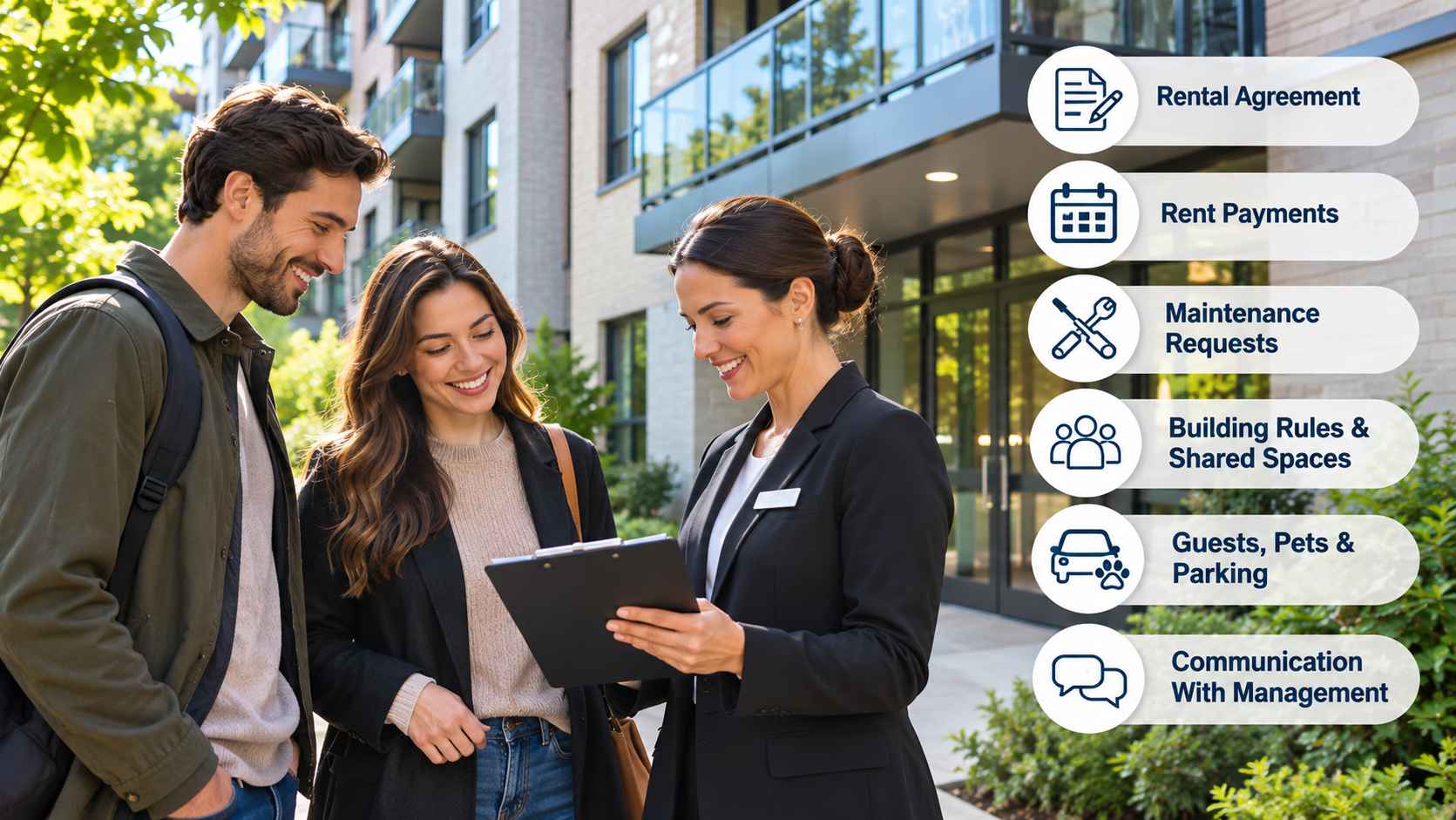
Living in an apartment building means having a private space to call home while sharing certain facilities and responsibilities with neighbours. From paying rent on time to reporting maintenance concerns, everyday decisions can influence both the rental experience and the wider residential community.
For tenants, understanding these responsibilities is an important part of settling into a new home.
Professionally managed apartment buildings generally have established procedures for maintenance, resident communication, and building operations. However, these arrangements work best when residents understand their own responsibilities and know when to contact property management.
Whether renting in Ottawa, Gatineau, Kingston, Edmonton, or Calgary, tenants should become familiar with their rental agreements, applicable provincial requirements, and individual building policies.
Understand Your Rental Agreement Before Moving In
A rental agreement outlines important aspects of the relationship between a landlord and tenant.
It typically addresses matters such as rent payments, tenancy terms, responsibilities, and applicable conditions.
Before signing, renters should carefully review the document and ask questions about anything they do not understand.
Pay Attention to Important Details
These may include:
- The agreed monthly rent and payment arrangements.
- Which utilities and services are included.
- Rules concerning shared facilities.
- Parking and storage arrangements.
- Procedures for requesting maintenance.
- Requirements relating to moving in and moving out.
Canadian rental laws differ by province, and lease provisions must be considered alongside applicable legislation.
For example, renters in Ontario, Quebec, and Alberta may encounter different legal requirements.
A lease should never be assumed to override rights or protections established by applicable law.
Pay Rent According to the Agreed Terms
Paying rent is one of the most fundamental responsibilities associated with renting an apartment.
Tenants should understand when payments are due and which payment methods are accepted.
Depending on the property manager, available options may include electronic payments or other arrangements.
Keep Payment Records Organized
Maintaining records can help tenants track their financial responsibilities.
For example, residents who pay electronically may wish to retain payment confirmations for reference.
It is also useful to understand whether parking, storage, or other services involve separate charges.
If financial difficulties arise, contacting the appropriate property representative promptly may help clarify available options.
Tenants should seek reliable information about their rights and obligations rather than assuming that informal payment arrangements are automatically permitted.
Keep Your Apartment Reasonably Clean
Routine cleaning helps maintain a comfortable living environment and protects the condition of the rental unit.
Everyday responsibilities generally include managing household waste, cleaning frequently used surfaces, and taking reasonable care of fixtures and appliances.
Prevent Avoidable Problems
For example, allowing food waste to accumulate may create unpleasant conditions.
Similarly, failing to address spills or excessive moisture can contribute to damage.
Regular cleaning of kitchens and bathrooms helps maintain the usability of these spaces.
However, renters should distinguish between ordinary housekeeping and repairs involving building systems.
A malfunctioning ventilation system or leaking pipe may require professional attention rather than a household cleaning solution.
Tenant and landlord maintenance responsibilities vary according to applicable law and the circumstances involved.
Report Maintenance Concerns Promptly
Even well-maintained apartment buildings can experience occasional repair needs.
Plumbing fixtures may develop leaks, appliances can malfunction, and heating or ventilation equipment sometimes requires servicing.
Reporting concerns early allows property management to assess the situation and determine appropriate next steps.
Explain the Problem Clearly
A helpful maintenance report should describe:
- The location of the issue.
- When the problem was first noticed.
- Whether it is ongoing or intermittent.
- Any visible damage or immediate concerns.
For example, explaining that water is collecting beneath a kitchen sink provides more useful information than simply reporting that the kitchen needs repairs.
Osgoode Properties provides rental policies and frequently asked questions, including information about contacting site offices for maintenance requests and obtaining emergency assistance.
Residents should follow the specific procedures communicated for their building.
Respect Shared Spaces and Building Facilities
Apartment buildings often include shared entrances, hallways, elevators, laundry rooms, and other common areas.
These spaces serve multiple households and should remain accessible and usable.
For example, leaving personal belongings in shared corridors may obstruct movement and create inconvenience for neighbours.
Similarly, laundry facilities should be used according to applicable building procedures.
Treat Common Areas With Care
Residents can contribute by disposing of waste appropriately, using facilities as intended, and reporting damaged equipment.
Shared spaces should not be treated as extensions of private apartments unless their use is specifically authorized.
Respecting these areas supports a more organized residential environment.
Understand Guest, Pet, and Parking Policies
Guests, pets, and vehicles are common aspects of apartment living, but related rules require careful attention.
Policies and legal protections differ by province and property.
Welcoming Visitors
Renters should understand applicable building access arrangements and any relevant guest policies.
Visitors should also respect shared facilities and other residents.
Living With Pets
Pet-related rights and restrictions vary across Canadian provinces.
Tenants should review applicable rules and understand how pet ownership may affect shared spaces and neighbouring households.
It is important not to assume that every provision concerning pets has the same legal effect in every jurisdiction.
Using Parking Facilities
Renters with vehicles should confirm parking arrangements, assigned spaces, and any additional charges.
Visitors may have separate parking procedures where facilities are available.
Understanding these details before moving in can help prevent confusion.
Communicate Clearly With Property Management
Good communication is a shared responsibility between residents and property management teams.
Renters may need assistance with maintenance, building access, payment questions, or changes affecting their tenancy.
Knowing whom to contact makes these situations easier to manage.
Use the Appropriate Communication Channels
Depending on the building, communication may take place through email, telephone, resident services, or direct contact with site staff.
When reporting an issue, residents should provide accurate information and retain relevant correspondence.
Property management teams may need time to inspect problems, coordinate contractors, or clarify building procedures.
Clear updates and realistic expectations are important on both sides.
Organizations operating professionally managed residential communities help coordinate building operations and resident services.
However, specific procedures and available services should always be confirmed for the individual property.
Follow Move-In and Move-Out Procedures
Moving into or leaving an apartment involves more than transporting furniture.
Residents may need to coordinate key collection, access arrangements, elevator bookings, and other building requirements.
Prepare Before Moving Day
Before moving in, ask whether the building has designated moving arrangements and whether advance coordination is necessary.
Protecting shared areas during furniture transportation is also important.
Renters should document the apartment’s initial condition through appropriate inspection procedures and report existing concerns.
Before moving out, tenants should review applicable notice requirements, cleaning responsibilities, and arrangements for returning keys or access devices.
Legal notice requirements and tenancy termination procedures differ by province, so residents should not assume the same rules apply everywhere.
Be Considerate of Neighbours and Community Living
Apartment living involves sharing a building with people who may have different schedules, family arrangements, and daily routines.
Being considerate of others can help create a more comfortable environment.
For example, someone working late hours may need to be mindful of noise when returning home.
Residents should also consider how gatherings, music, and movement through shared areas may affect neighbours.
Approach Concerns Respectfully
Minor misunderstandings can sometimes be addressed through calm communication.
However, residents should not feel required to confront neighbours directly when doing so would be uncomfortable or inappropriate.
Building-related concerns can be reported through established management channels.
Community living works best when residents respect one another’s privacy, reasonable enjoyment, and individual circumstances.
Remember That Tenant Rights Vary Across Canada
Although everyday rental responsibilities share common themes, Canadian residential tenancy laws are primarily governed at the provincial or territorial level.
Ontario, Quebec, and Alberta have different legal frameworks affecting landlord-tenant relationships.
These differences can influence maintenance responsibilities, deposits, tenancy termination, and other matters.
The Canada Mortgage and Housing Corporation provides general resources for renting a home, including information about rental agreements, maintenance, payments, and tenant responsibilities.
For specific legal questions, renters should consult the appropriate provincial housing authority, tenancy tribunal, or qualified legal professional.
Building a Positive Rental Experience Through Everyday Responsibility
A comfortable apartment community depends on both effective property management and responsible everyday habits.
Understanding rental agreements, paying rent according to applicable terms, reporting maintenance problems, respecting shared areas, and communicating clearly can all contribute to a more organized rental experience.
At the same time, renters should understand that their responsibilities exist alongside important legal rights and protections.
Every building has its own procedures, and provincial tenancy requirements must also be considered.
By learning these expectations early and asking questions when uncertain, residents can take better care of their homes while contributing to a respectful and welcoming community.
